Text Section
This is an example of a common impersonation scam, where the sender pretends to be a relative of the sender. In this case, the receiver has already responded to the initial messages from the sender, and has sent money to them. Click on the buttons to find the common indicators of a fraudulent message, and the best way to respond.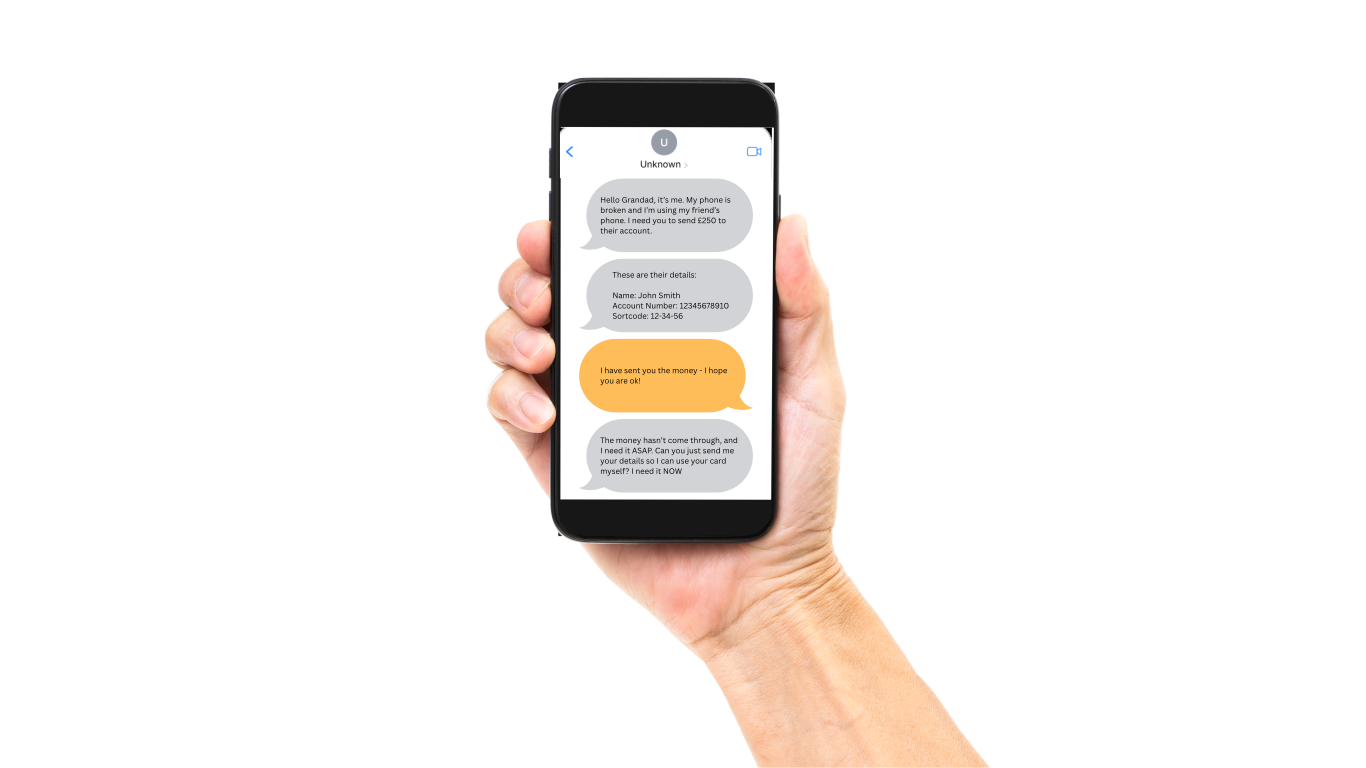
Who sent this?
This is an example of an impersonation scam, where the sender pretends to be someone that you may know. Notice that the sender has said "it's me" rather than giving an actual name. This is a common tactic used by scammers, as it makes the message seem more personal and less suspicious, as they avoid giving away that they don't actually know you personally. It is important in these situations to stop and think about if you trust the sender of the message.
Additionally, this sender has come up as 'Unknown' on the phone, which means that the sender has hidden their number from you. This is a common sign that the sender has harmful motives. However, there are cases where a legitimate sender would hide their number, so this alone does not mean that the message is fraudulent. Click here to close
Language
In this message, the sender uses emotive language and capitalised words to create a sense of urgency. The sender is doing this to try and get you to act quickly, without thinking about the consequences of your actions. Click here to close
In this message, the sender uses emotive language and capitalised words to create a sense of urgency. The sender is doing this to try and get you to act quickly, without thinking about the consequences of your actions. Click here to close
Is it too late?
In this example, you can see that the receiver of the message has already sent money to the sender's account. This may lead you to believe that it is too late to rectify the situation, and that you have already been scammed. However, it is important to remember that you can always contact your bank to try and get the money back. If you are unsure about a payment you are making, you should stop and think - if you do send it, try and use a credit card, as this will give you more protection than a debit card.
Even if you believe that nothing can be done, it is still important to report the incicdent to your bank, as they may be able to help you, and they can also block the sender from contacting you again, taking more money from you, or potentially scamming others. Click here to close
Why have I received this message?
It is important to remember that phone numbers are publicly available, and scammers can get hold of your number very easily - but this is not your fault. It is impossible to avoid receiving scam messages, it is how you respond to them that counts. Click here to close
It is important to remember that phone numbers are publicly available, and scammers can get hold of your number very easily - but this is not your fault. It is impossible to avoid receiving scam messages, it is how you respond to them that counts. Click here to close
Does this make sense?
When you receive a message, it is important to stop and think about what it is saying, and if it makes sense.
For example, in this message, the sender is asking you to send money to them, but they have not given you a reason why. In a legitimate scenario, you would expect to be given a reason. Additionally, the sender asks for money a second time, which is unusual. It is most likely that a scammer is trying to exploit the receiver further, by stealing their details.
In a case where an unknown sender is pretending to be someone that you know, it is important to stop and consider if the person you think it is would behave in this way. If something appears out of the ordinary, you may not be talking to who you think you are. Click here to close
What is the correct response?
When you receive a message that you believe is fraudulent, it is important to not respond to the message, or take any actions that the sender is asking you to do. If you think that the sender is someone that you know, you should try contacting them directly using a contact method that you know is legitimate, to confirm if it is actually them that sent the message.
Even though in this example the receiver has already complied with the sender's request, it is not too late to rectify the situation. You can still report the incident, and potentially get your money back. It is difficult to recouperate from scams such as these, but you should not let that put you off reporting what has happened.
It is also important to report the message, to avoid the sender from contacting you again, or potentially scamming someone else. You can do this by forwarding the message to 7726, which is a free service that will report the message to your network provider.
To find out more on how to report a fraudulent message, click here Click here to close